Phase 5 of the Salt Path: Boscastle to St Ives
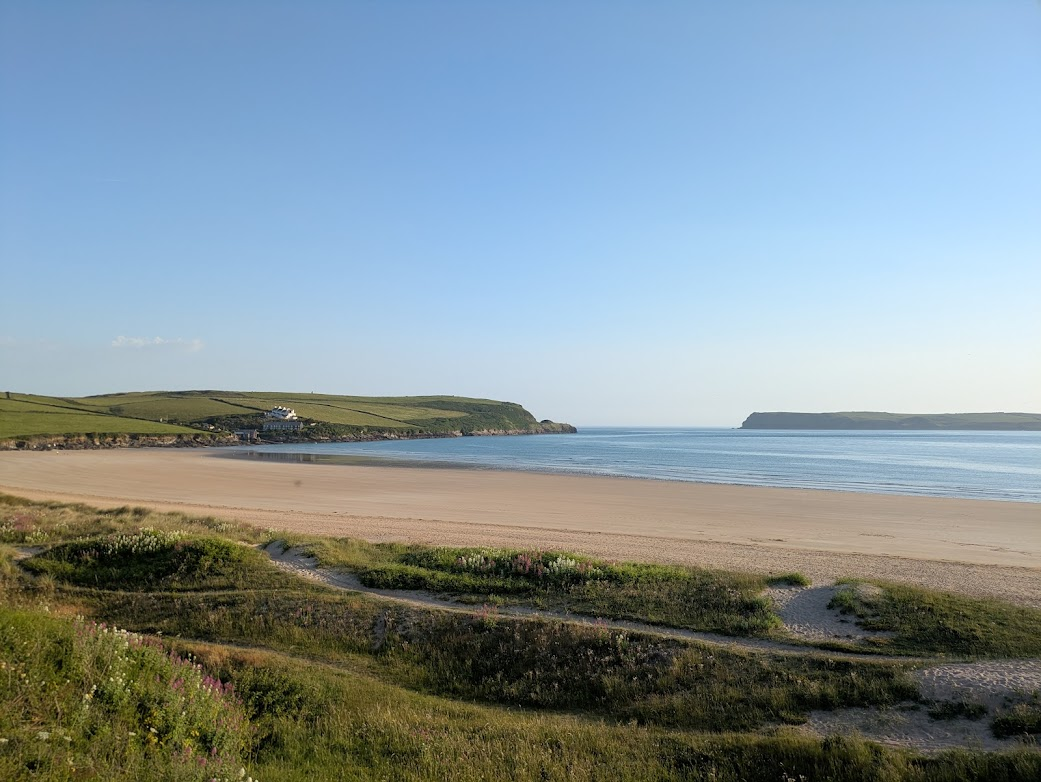
This past week, we have been based in St Columb Major, a Cornish town a few miles inland, and well away from the hustle and bustle and total chaos of the seaside towns over half term.
St Columb Major is named for a sixth century Cornish saint (saintess?) St Columba, who was martyred by a pagan king for refusing to renounce her faith and was apparently buried somewhere around here. It is a quaint little town, with impossibly narrow streets and very little parking, but the centre contains many lovely slate hung houses and several stately bank buildings. (Oh, by the way, the label ‘Major’ distinguishes it from St Columba Minor, a neighbouring village on the outskirts of Newquay.)
Apparently St Columb Major was once destined to be the banking capital of Cornwall, but then Truro took over as the county capital, and St Columb has become largely overlooked since it was bypassed by the Atlantic Highway (aka A39) that charges down from Bath, through Somerset and Devon to finish its journey some 200 miles later in Falmouth, on the south east coast of Cornwall.
In the centre of town, overlooking the churchyard, stands St Columba’s Church. Built in the 14th century, it boasts an eighty foot belltower, containing eight church bells. In 1920 a chiming clock was added, as a memorial to the local boys who died in World War I. Less than 100 metres from our bedroom window, that clock chimed like Big Ben at every quarter hour and then struck the hour as well. As a special bonus, the town’s most excellent and dedicated bell-ringers practice for two or three hours on a Wednesday and are justly proud of their expertise. I wasn’t at all sure they needed quite so much practise – they sounded well-nigh perfect to me! My ears are still ringing…
***
As we venture further into Cornwall, it is amazing to see how many artists have established themselves in this remote county. Every town we pass through, we find at least one private gallery, often more. Seascapes and fishing villages, stormy moors and sweeping sandy beaches abound.
Cornwall has been a major hub for British art for decades and is defined by three distinct movements. The Newlyn School was a colony of artists based just south of Penzance in the fishing port of Newlyn, from 1880 until WWI. These painters were inspired by the French Impressionists who loved to paint outdoors and capture the natural light, typically finishing a piece in a single sitting. In Newlyn they found the light wondrous, the rent inexpensive, and models – usually local fisherman and their families – remarkably cheap.
In the mid-20th century, St Ives became a renowned hub for Modernist painters, sculptors, and potters, including Dame Barbara Hepworth and her husband Ben Nicholson. There is even a St Ives Tate these days, where many of the most famous Cornish artists are exhibited. We spent a quiet morning there, exploring its collection of modern art and enjoying the fabulous views over the rooftops of St. Ives, Porthmeor Beach and the Atlantic Ocean.
Cornish Naïve Art emerged between the world wars, in response to the work of Alfred Wallis, an artist without formal training who began painting at the age of 70, in something of the style of Lowry or Ken Done.
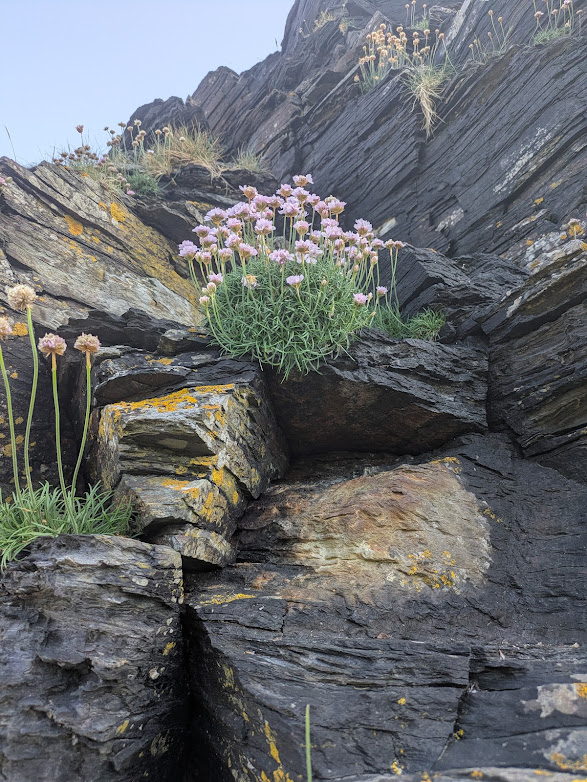
Today, many contemporary artists still gravitate to the dramatic Cornish coast and bucolic countryside. So, it was a particular joy to discover that our cosy flat in St Columb was owned by a Cornish artist and his wife.
Jeremy Annear is a renowned Modernist and abstract artist, who lives and works in St Columb Major, his studio and gallery just metres from his front door. While I am totally ignorant when it comes to abstract art, I learned a lot this week, chatting to Jeremy over a bottle of Rosé and hearing how he processes the world around him to create the simple lines, block colours, and geometric forms that reflect his unique, somewhat stark vision of the landscape. Standing in his gallery and contemplating his paintings, I was surprised to find myself drawn into his images, and perhaps even beginning to understand what he was trying to achieve; starting to glimpse what was beneath the surface. And imagine my even greater surprise to discover a small Aboriginal dot painting leaning against the wall just inside his gallery. Apparently, he has made several visits to Australia and has been inspired by the ‘graphic elements’ of Indigenous Australian art.
***
After hours of trudging along the Cornish coast each day, the One & Only has been perfectly happy to put his feet up and survive on my cooking, and with a great little space in the heart of the town, we were not terribly inspired to eat out this week. Especially as the reputable pub next door had been recently sold and had yet to reopen. We did, however, enjoy a cider or two at a local pub, when I went to collect the intrepid walker at the end of each day, so he was at least rewarded with a beer after all his effort.
So, I got to meet Boscastle, a tiny village owned by the National Trust, that is tucked into a deep cleft in the landscape just north of Tintagel. We didn’t have time to stop for long – and don’t drive down there if you are prone to vertigo – but we were able to spend a lovely, tranquil hour there, following a family of soft, fluffy ducklings along the little River Valency to the harbour, laughing as they bounced over – and under – the miniature rapids with infectious delight. The natural harbour at Boscastle is protected by a 16th century stone wall, and from the top of the wall, you can see the blowhole just beyond the harbour entrance, which shoots out a horizontal spout at low tide.
Unfortunately, I gave only a passing nod to Port Isaac – Doc Martin territory – and was forced to scoop up the One and Only from the forecourt of the Co-op supermarket at the top of the town, as all the car parks were school-holiday-choc-a-block. When I dropped him off the following morning, to continue on his merry way, I thought I may be stuck there forever, as the lanes near that famous wee harbour were so narrow, and I had to squeeze between the Hobbit-sized – but very solid – houses with an equally solid car that was not inclined to imitate the Knight Bus.
Our next successful pickup point was at Rock, an extremely popular holiday destination across the Camel estuary from Padstow. It’s got a much more romantic name in the original Cornish, but I can neither remember it or spell it, so Rock it is. Rock is crawling with foodies and holidaymakers and their Down-From-London juggernauts, and has been nicknamed both ‘the Kensington of Cornwall’ and ‘Chelsea-on-sea’ as a nod to its more affluent visitors. Thanks to an unusually hot half term, all the beach dwellers were a bright shade of lobster. By pure fluke, I managed to snag a parking space, so we were able to enjoy a walk on the vast sandbank on the northern side of the estuary and even have a drink at a bar overlooking the ferry to Padstow, a multitude of boats moored in the shallows between.
For some reason, Perranporth had stuck in my head as a pretty name, and as it also boasted a 2- mile stretch of beach heading north to Newquay, I thought it might be worth a visit. It wasn’t going to work as a pickup point, but I wandered down anyway and met the One & Only for morning tea, instead. The tide was right out, exposing veritable hectares of sand that were the delight of every local dog and its owner.
By the time I took off, the carpark – almost empty when I arrived – was crammed with holiday makers. Does this blog seem heavily focused on carparks? To be honest, it has been the most stressful part of the trip, steering our overly large car around tiny streets and into extremely cramped parking spaces – if there were any to be had. And let me add, anything bigger than a Fiat 500 would be overly large around here! So, I was very grateful to reach St Ives and find a more-than-generous carpark at the top of the town. I only wish I’d had roller skates – or skis – to whizz down the almost vertical footpath to the harbour.
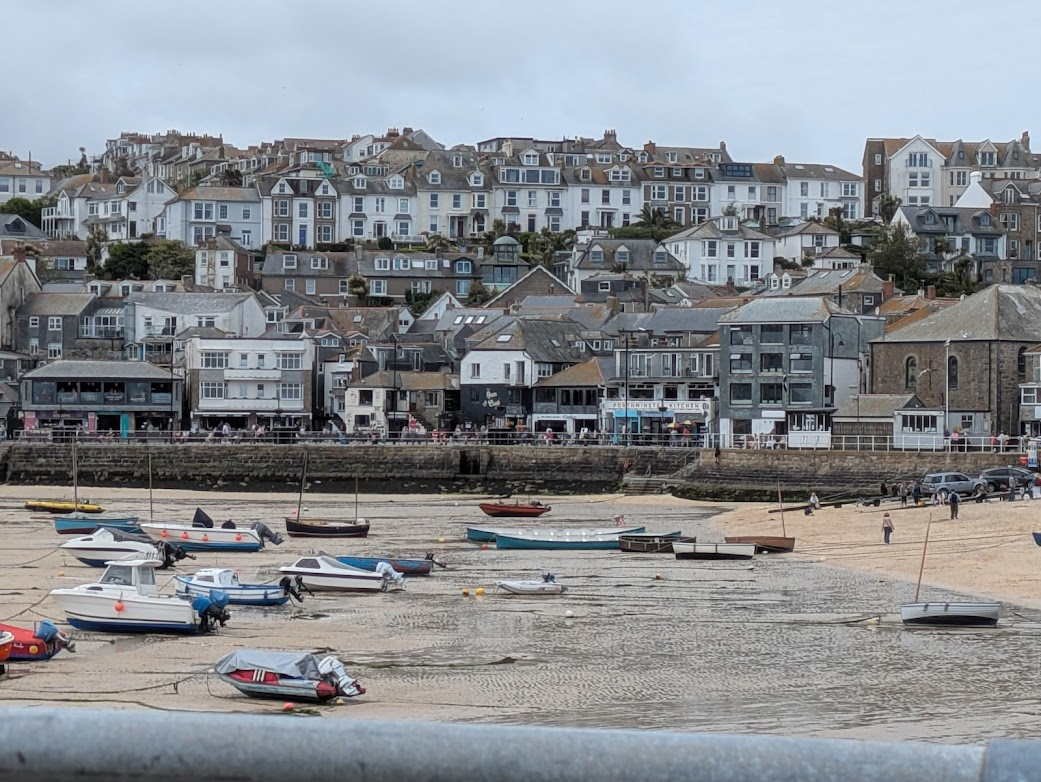
St. Ives was our last collection point before we left St Columb, which happily coincided with a day off for the One & Only, and gave us a chance to spend a happy, sunny day in this delightful town. Here we found cobbled, pedestrianized streets, quaint old fishermen’s houses, pretty shops and a plethora of art galleries, copious venues with rooftop bars, and not one but several coves and beaches. This was our day to visit the Tate, inspect the Lifeboat Station on the West Pier with its £5,000 rescue boat and tractor, enjoy a Thai lunch on Wharf Road and walk a lap of ‘The Island’ – or rather the headland – above Porthgwidden Beach. On this broad, grassy bluff with its panoramic views of the town and coastline, we found a brief and peaceful respite from the crowds along the seafront. We also found a small stone chapel perched on the top. St Nicholas was the patron saint of sailors, as well as children, so he was a most suitable saint to give his name to this pocket-sized chapel that is surrounded by sea on three sides.
And now it is time to move on across the Penwith Peninsula to meet some friends near Penzance…