
The penultimate phase: the Lizard Peninsula
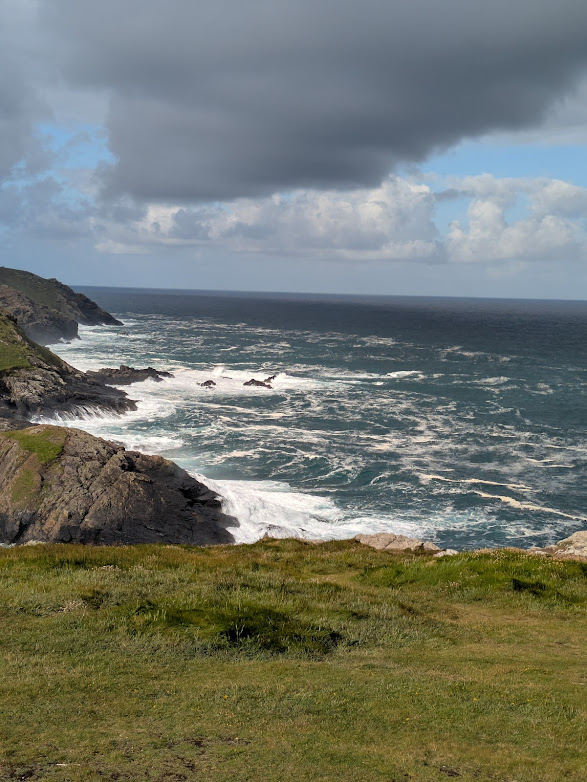
I have just been looking at a map that divides Cornwall into six areas, like stripy socks, and noticed that the southern end of the county looks something like a crab claw. So, we have spent the last few days navigating the left-hand claw, which contains the southernmost point of England, Lizard Point and notoriously treacherous coast line, once known as the Graveyard of Ships. We also moved our base to a very pink, very comfortable apartment in Helston.
While nothing is very far away in Cornwall, this 11th century market town is a little off the beaten track as far as the tourist trade is concerned, despite being only a stone’s throw from Lizard Point, Falmouth and St Michael’s Mount. For me, it was equidistant – or almost – to the various drop off and collection points I needed to reach this week, so it proved an incredibly handy place to stay, and it was kind of fun to be in a ‘normal’ town after weeks of tourist towns overflowing with holidaymakers. Even Lizard Point seemed far less commercialized than some of the other popular sites of Cornwall.
So, just a teaspoon of local history on this sunny Saturday morning:
Helston was chartered by King John in 1201. For those of you – like me – who are looking slightly bamboozled by the term ‘chartered’, this means that the monarch has granted the town municipal privileges and the right to self-government. Historically, this allowed Helston to hold markets, collect tolls, and free residents from serfdom. And indeed, there was not a serf to be seen, and Helston still holds regular markets to this day.
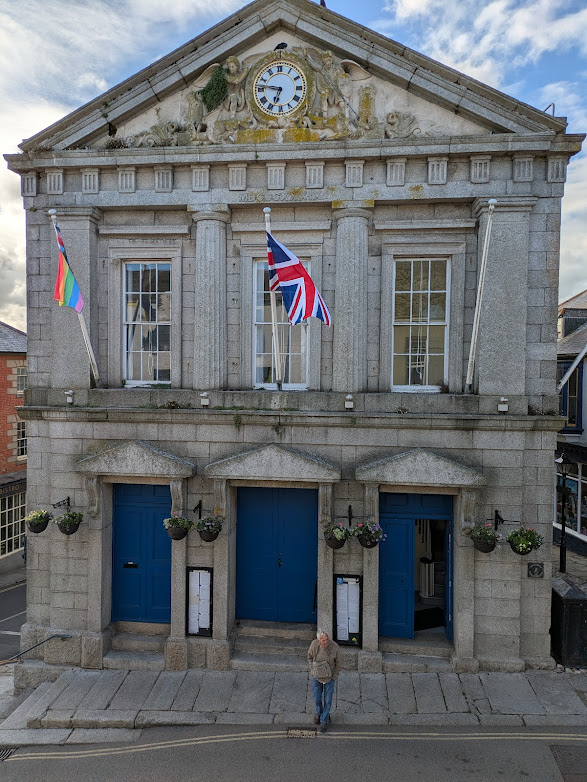
Helston was also one of four towns in Cornwall in which tin was assessed, formed into coins, stamped and sold in a ‘Coinage Hall’. These were known as Stannary towns. While tin has not been used for making coins since 1838, Helston’s main street is still known as Coinagehall Street, and there we stayed, in an apartment called The Stannary, right above one of the old banks and looking out over the Guildhall. So, hopefully you’ve learned two new and incredibly useful words – if you happen to be in Cornwall!
It’s obvious from the quality of the municipal buildings in Helston that it was once a reasonably wealthy town, largely thanks to the local mine, which once employed over a thousand people. While the outskirts of Helston are hemmed with council houses – practical but not particularly picturesque – the centre of town has a wonderful collection of old stone cottages, terraces and a lovely stone church perched halfway up the hill, where they were holding a choir practice the evening we popped by for a peek. Another evening, we were again entertained by the bell ringers practising on the church bells.
***
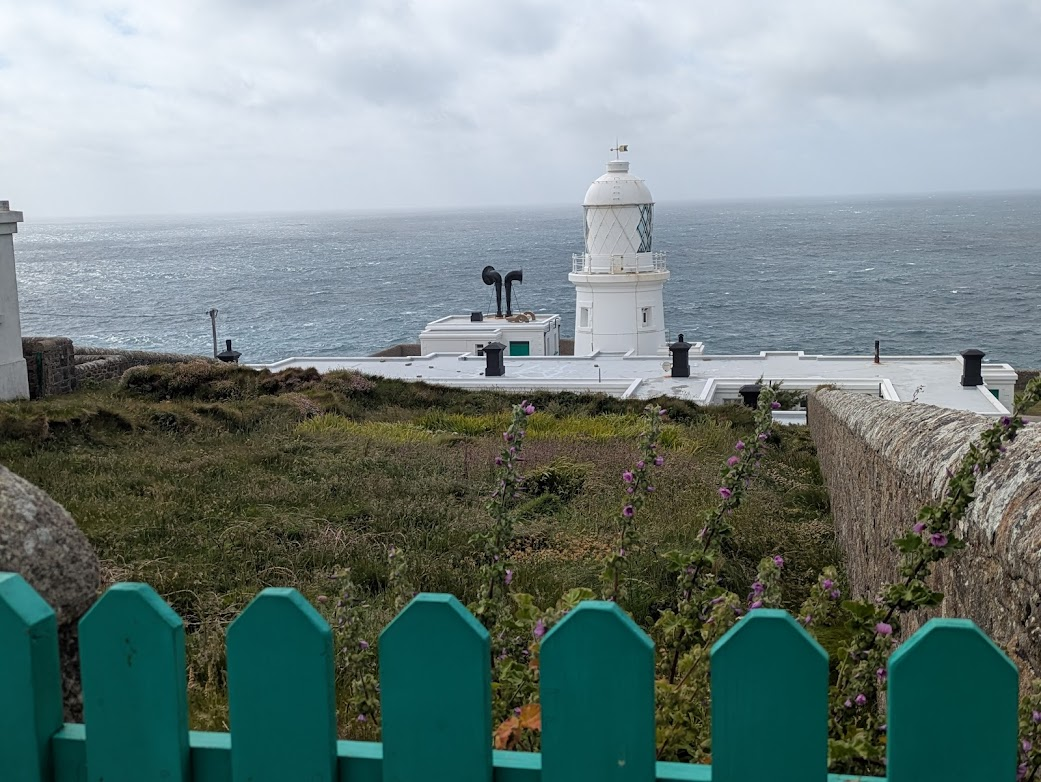
While the One & Only circumnavigates the Lizard Peninsula on foot – a ‘high point’ or ‘headland’ in Cornish, not a reptile – it has been great fun exploring the coastal villages, tucked into nooks and crannies along the route, or perched atop dramatic cliffs overlooking the Celtic Sea. As I stand on the edge of the precipitous and craggy cliffs at Lizard Point, and face south, I might, if my sight were telescopic, spot Brittany, 200 miles off the coast. Or, turning to the southeast, it’s about 100 miles to Guernsey in the Channel Islands. Too far to swim, but with a small fishing boat perhaps, I could follow the route of the Cornish smugglers to France…
***
I know I’ve said it before and will doubtless say it again, but England never ceases to amaze me, for all the ‘stuff’ that is squeezed onto such a small island. Doctor Who fans will understand the concept: England is an absolute Tardis. Honestly, how is there possibly room for 70 million people, countless towns and cities, endless miles of motorways, copious airports? Yet there is still so much space? I haven’t seen a city in weeks, just lush fields edged in thick hedgerows, broad expanses of empty moorland, uncluttered coastline, lakes and rivers and streams and old stately homes surrounded by acres of parkland. It is gobsmacking.
***
Not far from Helston, on a rare day off, we discovered one such estate at Godolphin. Hidden away in a maze of shady lanes, this fascinating mediaeval estate was built on the wealth of the tin and copper found on the property and was once a significant and rather grand abode. Then the promise of power and position in London tempted the family to leave Cornwall for the capital, and for a hundred and fifty years, Godolphin was left in the hands of tenant farmers, who pulled down the Great Hall and repurposed the stone to build outbuildings, such as stables and byres for the animals, and a cider house.
Godolphin is only open to visitors on the first week of every month (except January), and it was pure fluke that we landed there that week in June, just in time for had an introductory talk about the stew ponds (for fish), the deer park, the orchards and of course life in the house itself, which has housed Sheriffs of Cornwall, Dukes and farmers, when the King’s Chamber was repurposed to store potatoes. The rest of the month it becomes a holiday house, so if you should fancy a holiday in a mediaeval manor house – with all the mod cons of course – it sleeps up to 12 guests. Perfect for one of those 19th century country weekends – without the serfs or the servants!
***
At the end of a long day’s hike, the One & Only is more than happy to wait for me at the nearest pub. On one occasion, this was a beautiful, thatched pub at Helford, overlooking a tidal river not far from Frenchman’s Creek. If you are at all familiar with Daphne du Maurier’s novel of the same name – and another called Jamaica Inn – this should instantly remind you of the long history of smuggling and piracy that goes hand in hand with the history of virtually every coastal village in Cornwall and Devon. Driven by heavy government taxes on imported goods, fishermen and their families worked together to sneak illegal goods from Europe into England, hiding chests of brandy, tea, and tobacco in tunnels, sea caves, and cellars along the jagged and inaccessible coast that was so awkward to police. The more professional smugglers, successfully dodging the customs men for decades and providing employment and contraband for the locals. Also at work, were the wreckers, who purposely lured ships onto the rocks for salvage.
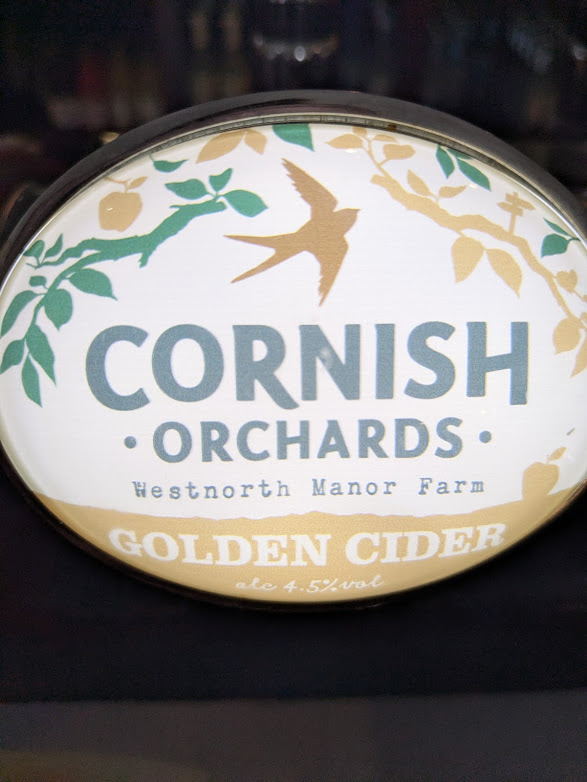
Yet on a mild, summer afternoon in this peaceful riverside village, it is hard to imagine such scenes of violence. As the tide drifts up the estuary, the boats rise off the mud and start to bob about. Bumblebees are purring busily, as they dip in and out of the tall, purple foxglove flowers. Robins and finches dart hither and yon, in and out of the hedgerows, and around our feet checking for crumbs, chirping merrily, like ‘Disney birds,’ as my brother calls them. And the cider is the best I have tasted.