In 1954, a Chilean poet and politician wrote an Ode to Tomatoes. I won’t reproduce the whole thing here, but I did enjoy this short excerpt, translated from the original Spanish, which reminds us why it is such a treat to eat:
…its remarkable amplitude and abundance,
~ Pablo Naruda
no pit, no husk, no leaves or thorns,
the tomato offers its gift of fiery color
and cool completeness.
The tomato plant consists of edible fruit or berries that we have always tended to treat as vegetables. Tomatoes, as you may know, originated in the Andes, a vast mountain range that stretches all the way down the western rim of South America, and include Neruda’s own country, Chile. First domesticated by the Incas and the Aztecs in about 700AD, the name ‘tomato’ comes from the Aztec Nahuatl word tomatl or xitomatl.
During the 16th century, Spanish explorers introduced the tomato to Europe. As a member of the nightshade family that includes tobacco, potato, and chili peppers, its genetic heritage perhaps explains why this unfamiliar plant was initially treated with suspicion by the Europeans, who feared it might be poisonous, and for many years grew it only as an ornamental plant. Hard to believe now, when it has been so thoroughly indigenized into Italian, Spanish and Portuguese cuisine, not to mention Campbell’s tomato soup, which was first presented to the American public in 1895. Today, there are thousands of cultivars of various colors, sizes, shapes and flavors… or no flavour at all.
By the 18th century, the tomato had been nicknamed the “poison apple” after people fell ill or died after eating them, and were feared to be highly toxic for almost two centuries. (So perhaps Snow White – a fairy tale originally written in 1812 – actually ate a poisoned tomato?) It turns out, however, that this was hardly the fault of the innocent tomato. Instead, it was due to the pewter plates we used to dine on. These contained high levels of lead that caused lead poisoning when mixed with the natural acidity of the tomato.Providing a high dose of vitamin C, potassium, fiber, and the antioxidant lycopene, tomatoes are perfectly safe when eaten in moderation, but excessive amounts can cause reflux, heartburn and bloating. Perhaps I should hide away some of the gallons of tomatoes we have acquired this week, and hand them out sparingly!
After their initial suspicion subsided, the Europeans remarketed this meek and mild red fruit as a pomme d’amour (love apple) and it suddenly became all the rage as an aphrodisiac. Then, in the 20th century, Tomato Festivals grew increasingly popular. La Tomatina in Buñol, Spain involves a massive food fight and is now a famous summer tourist attraction. A similar event also developed in Boyacá, Colombia in June, as part of the harvest festival. Towns in Georgia and Pennsylvania honor one of their primary agricultural products with their own versions of the tomato festival, but incur far less mess and waste.
To ease my mind regarding such a ghastly waste of tomatoes, I read that the squashed pulp is washed off the streets and down the drains, to be processed at wastewater treatment facilities, while some of the more solid tomato waste is scooped up and sent for composting. I am also reassured by the fact that the thousands of kilos of tomatoes used for this madcap annual battle are not fit for human consumption or commercial sale but are genereally overripe or misshapen fruit that is specifically collected for the event.
As I may have mentioned before, the One & Only has always had something of an obsession with tomatoes. Naturally, we have tried growing them ourselves, but they do not tend to thrive in our garden, probably due to the fact that we basically live on a sand dune, which makes creating an effective vegetable garden almost impossible. One year, I decided to try growing tomatoes in hanging baskets. This worked quite well, although the plants that do best are the ones that appear unexpectedly, either self-seeded or bird-seeded. Even then, their success is entirely random.
So, after spending the summer in Europe, where shop-bought tomatoes have proved as uninspiring and tasteless as those at home, we were delighted to return to the Isle of Wight this autumn and rediscover a homegrown tomato company which actually produces something highly edible and tasty.
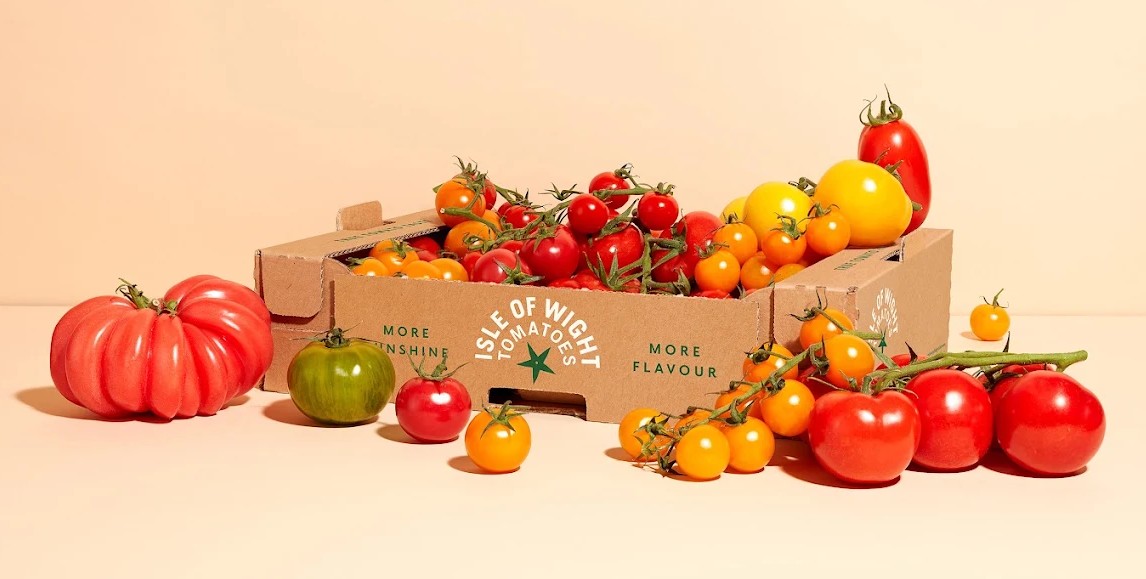
On a sixty-acre farm in Arreton Valley, Isle of Wight Tomatoes was established almost twenty years ago, and the company is ‘passionate about growing tomatoes that taste the way they should.’ Combining ‘age-old traditions with modern-day innovation,’ they are also ‘on a mission to be climate positive.’ Not only are they attempting to grow environmentally friendly tomatoes, but they are also producing a multitude of mouth-watering varieties in a range of colours and sizes, which are only picked when perfectly ripe, so you can enjoy them at their very best.’ Isle of White Tomatoes also produces a range of juices, sauces and condiments. The website provides dozens of tomato recipes as well, just in case you get bored of eating tomatoes on toast or in a plain tomato salad. As if.
So, we have spent the week collecting bags of these delicious local tomatoes wherever we come across them, and they are definitely an improvement on the chronically tasteless items we generally find in the supermarkets, however you care to pronounce them!
*George and Ira Gershwin, “Let’s Call the Whole Thing Off.”
Photograph courtesy of the website for Isle of Wight Tomatoes.