So, from the Douro Valley we headed south for Evora, a town that came highly recommended. A medieval walled town in south-central Portugal, Évora has been shaped by the Romans, the Moors and the Portuguese. It is the historic capital of the Alentejo region and was designated a UNESCO World Heritage Site in 1986. It is also set to become the Cultural Capital of Europe in 2027.
We had booked a room at the Holiday Inn, just outside the city walls, and found ourselves in a room that felt positively cavernous after our little nest in the Douro Valley. We gained our first glimpse of Évora through the arches of the sixteenth century Água de Prata aqueduct. Built between 1531 and 1537, this gem of Renaissance gem architecture travels roughly 18km from springs northeast of Évora, before crossing the city wall and filling a system of public fountains and cisterns that runs through the city.
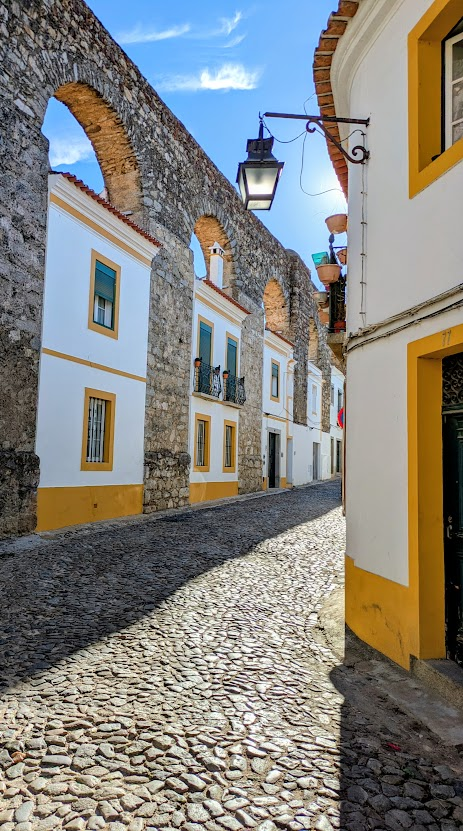
Évora proved to be an eminently walkable town, through narrow, cobbled streets and wide squares encircled by attractive architecture and usually containing at least one pretty fountain. Our first afternoon there, we followed the aqueduct from the outskirts of town, over the wall and along a road where houses and shops were built into its arches.
The Romans conquered the Celtic settlement of Ebora in 57 BC, renamed it Liberalitas Julia, then expanded it and built a thick stone wall around it. About five hundred years later, the Roman town was overrun by German Visigoths, who were conquered in their turn by the Arab ruler Tariq ibn-Ziyad in 715 AD. For almost five hundred years, Yāburah prospered under Moorish rule and the Arabic influences on the local architecture are still apparent. Then, in September 1165, Gerald the Fearless attacked the city and successfully won it from the Moors on behalf of the Portuguese king, Afonso I.
In the sixteenth century, the Jesuits founded a university, but were expelled from Portugal in the eighteenth century, on the orders of one anti-Jesuit statesman, the Marquis of Pombal, after which Évora went into decline. The university only reopened in 1973, just before the Carnation Revolution brought an end to almost fifty years of dictatorship and established the Third Portuguese Republic.
The next morning, without any real agenda, we wandered through the Porta de Aviz to explore Évora before the heat set in. Pausing near the university for coffee, we watched a group of students protesting against something – we never knew what – in their Hogwarts style robes. Eventually, our path wound up to the top of the hill, where we found ourselves surrounded by various examples of Evora’s long and complex history: a first-century Roman Temple with Corinthian columns dedicated to Augustus, the founder of the Roman Empire; a fifteenth century Gothic church – Igreja de São João Evangelista or Igreja dos Lóios – and a small, contemporary park – Jardim Diana – with views across the city that are best visited at sunset.
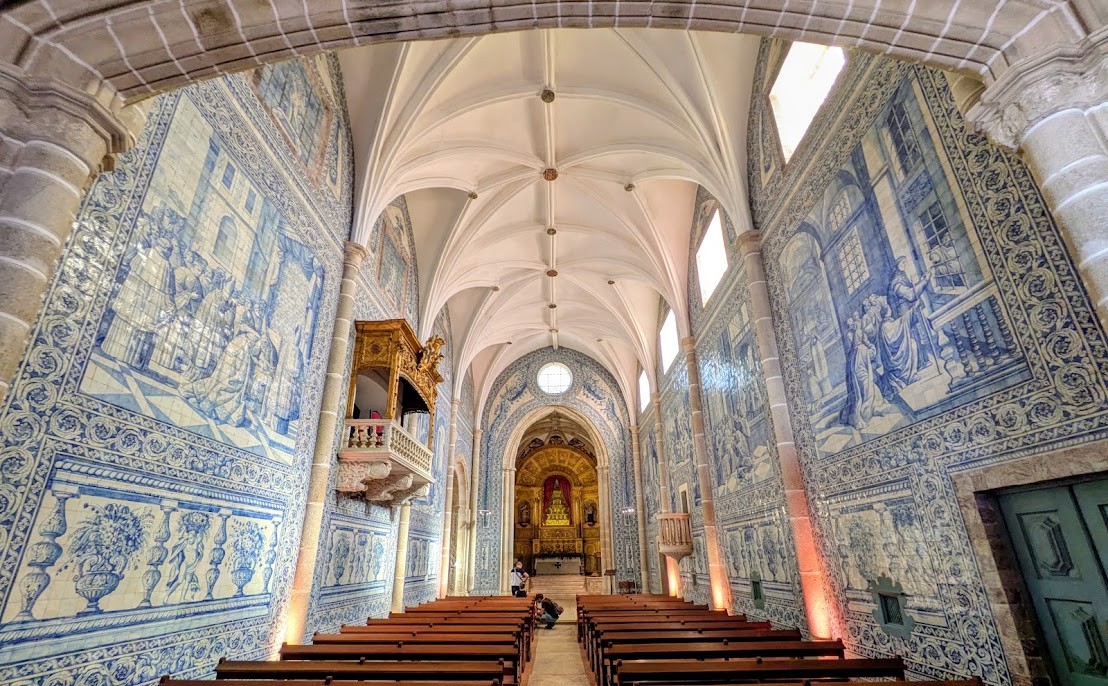
Inside the church, we found the walls covered from floor to arched ceiling in beautiful blue and white tiles, which had been painted by a renowned eighteenth-century Portuguese artist, António de Oliveira Bernardes. His work can apparently be found in churches all over Portugal and the Azores. Below the nave, a wooden door in the floor reveals a crypt piled with bones and opposite it, a deep, Moorish well. Later, while I went for a siesta, the One & Only discovered the Church of St. Francis (São Francisco) and its Chapel of Bones (Capela dos Ossos), which features walls neatly lined with thousands of human skulls and bones.
That evening, we enjoyed a terrific Indian curry, and the second night we found a top little Italian restaurant under the arches of the aqueduct. Well, it had been three weeks of Spanish and Portuguese cuisine and we felt the need for a little variety! With only time for a couple of days in Evora, we feel we barely touched the surface of this wonderful town, but hopefully we’ll get back there another time.
While planning our route through Portugal, we came across several lakes, many of which turned out to be part of a national reservoir system. The Alqueva Reservoir in the Alentejo region is the largest reservoir in Portugal – in fact it’s the largest in Europe – and on the map it looks like a leafy seadragon. It was formed by an arched dam on the Guadiana River, about an hour southeast of Évora, and by fluke, we found ourselves at the Reservoir interpretation centre beside the Barragem de Alqueva. Outside, we enjoyed fantastic views over the reservoir, the dam wall and down into the valley below. Inside, an exhibition provided an 3D model and interactive videos to tell the story of the dam’s creation and purpose. The Alqueva Centre is the interpretative space of EDIA, the company who designed, constructed and managed Portugal’s largest hydro-agricultural project. Today, the reservoir covers approximately 250 km² and holds around 4,150 million cubic meters of water. The dam stands 96 meters high with a length of 458 meters. But it is also part of a larger system that incorporates
Portuguese dictator António de Oliveira Salazar – related to Salazar Slytherin, obviously! – originally introduced the idea of a national dam in the 1950s, but it would be discussed and debated for decades before the decision was finally made to build it some forty years later.
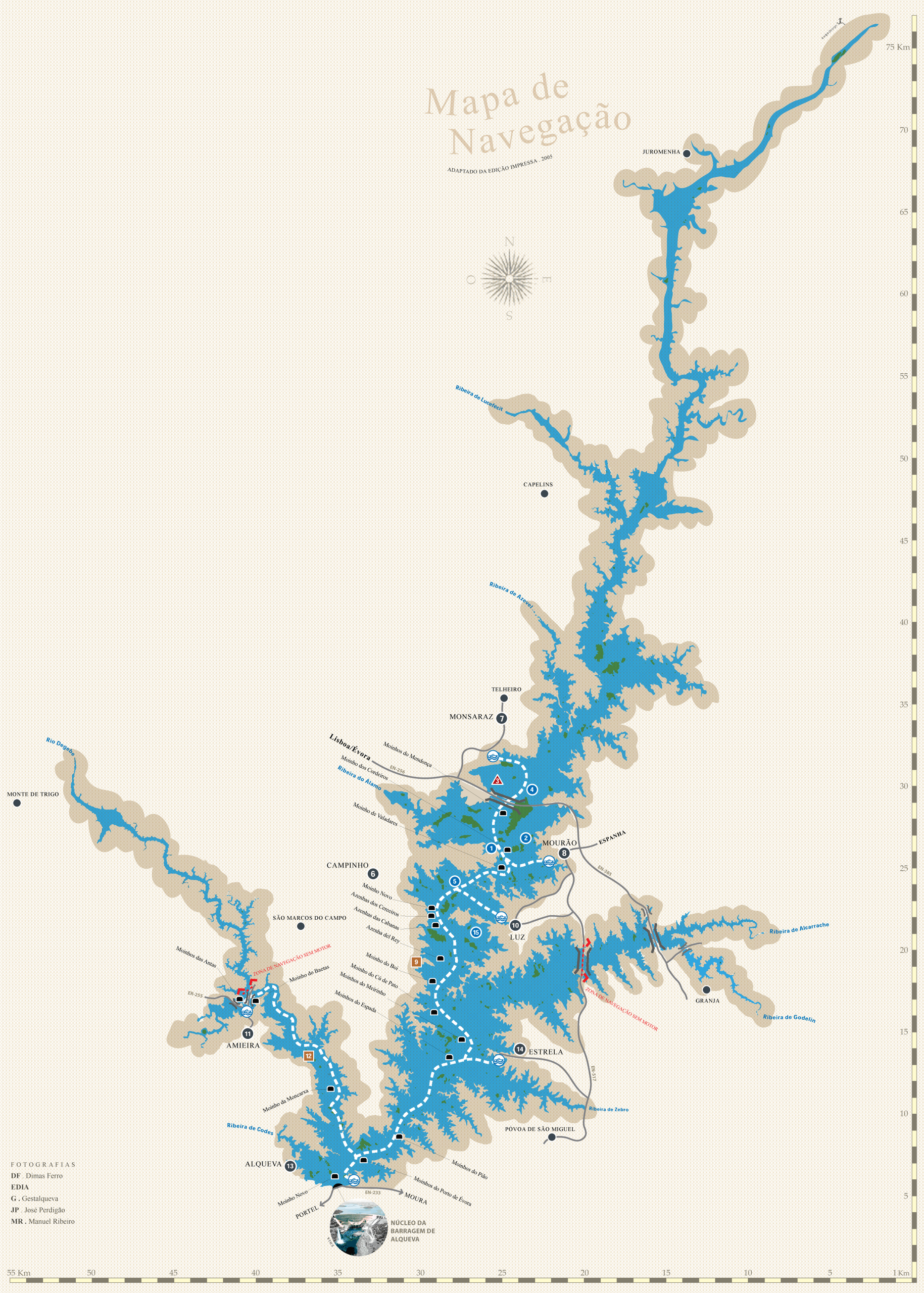
It was planned that the dam would not only help to irrigate a large and notoriously dry region of Portugal but that it would provide hydroelectric power and a guaranteed public water supply. It was also intended to create a sustainable tourism destination for watersports, birdwatching and stargazing. And it was hoped that all these elements would create huge employment opportunities in the region. The dam was completed in 2002, and the reservoir reached its full operating level in 2010.
However, there were some down sides to the dam. The village of Aldeia da Luz had to be flooded to complete the project, although it was recreated on a new site. A Roman fort – Castelo de Lousã – was carefully enclosed beneath thousands of sacks of concrete and sand, so it could be conserved when submerged beneath the rising water, only to reappear, like Atlantis, during periods of heavy drought.
The creation of this vast reservoir also caused the destruction of prehistoric engravings and the habitats of rare and endangered species including raptors, bats, wild boars, otters and the Iberian lynx. It required cutting down over one million trees, and the loss of forests and scrub severely reduced native prey populations. Since then, however, much work has been done by scientists to preserve and restore native flora and fauna.
After exploring this fascinating exhibition we drove across the dam to the edge of the reservoir where a large group of students were kayaking beyond the picnic grounds, and we could lunch in a small restaurant overlooking the water. I only wished the One & Only had brought his binoculars so we could have checked out the local birdlife.
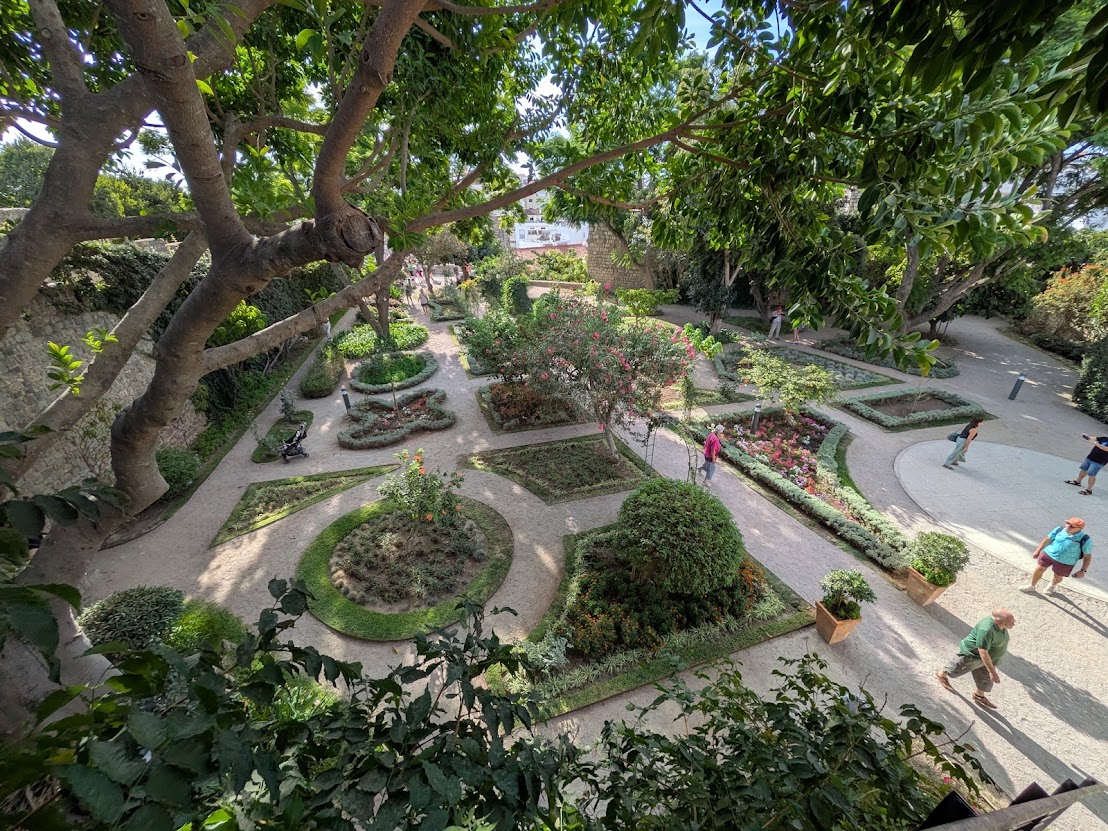
Our next stop was down on the south coast to visit old friends who had recently settled in the Algarve. We did not find them among the busy, seaside streets of Quarteira however, nor in the exclusive designer town of Vale do Lobo. Instead, they have built a beautiful home a few kilometers inland, in a quiet, rural nook among palm trees, bougainvillea and orange orchards. We hardly felt the need to leave their gorgeous garden but we did venture out to explore a little of the area, including the serene little town of Tavira, only 30kms shy of the Spanish border, on the banks of the Gilão River. After breakfast in a local bakery, we crossed the river to the older part of town and headed for the 12th-century medieval ruins of Castelo de Tavira, with its shaded gardens. We also clambered up some extremely steep stone steps to walk along the old castle walls and enjoy panoramic views over the terracotta roofs of the town below. I came down rather warily, but did not have to resort to coming down on my bum, like one overly cautious young woman!
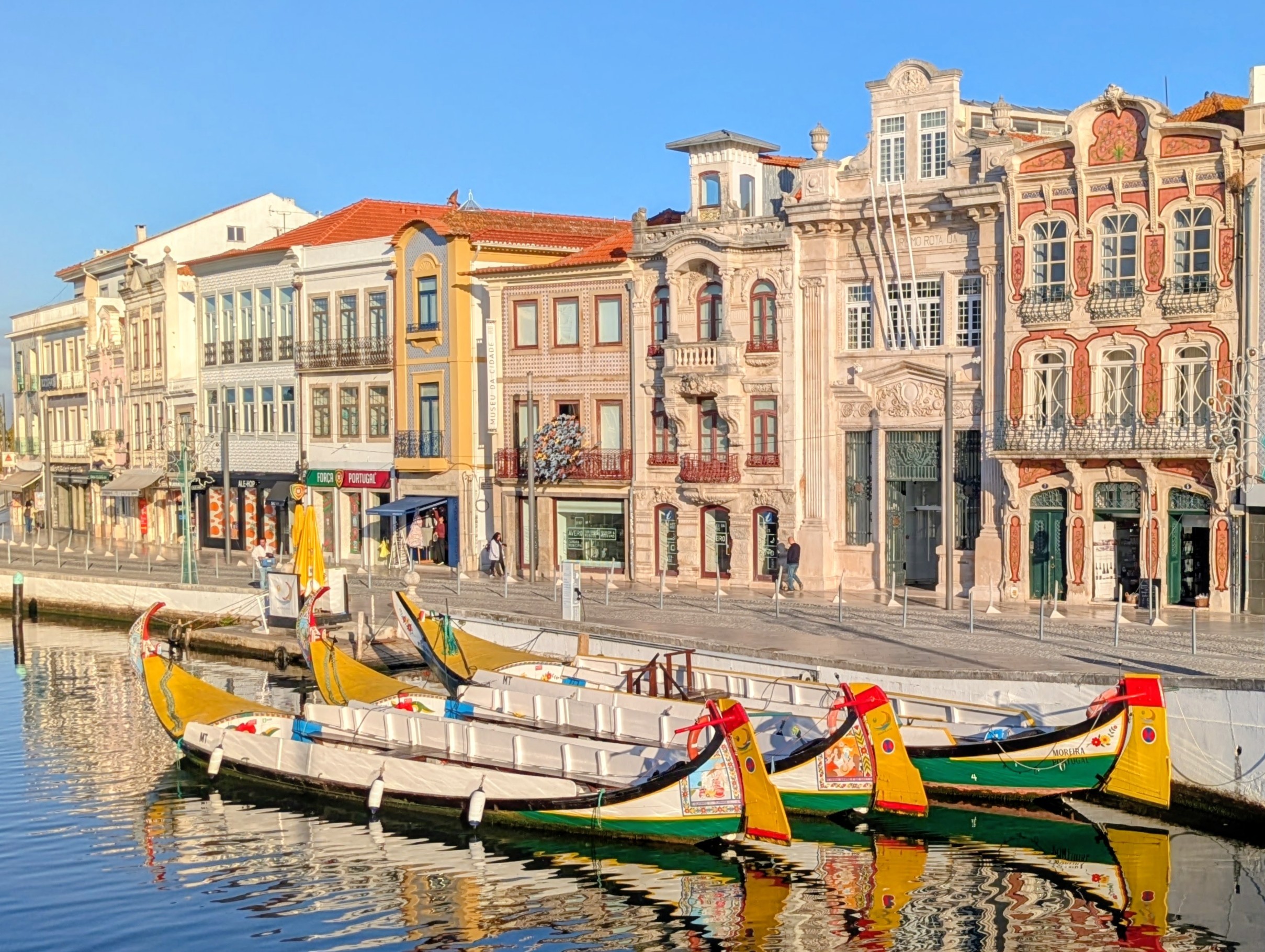
Our final stop required a bit of a schlep along the motorway from Quaitera to Aveiro, on Portugal’s west coast, about an hour and a half south of Porto. Situated beside the Ria de Aveiro lagoon, the town is known for its canals – so of course it has been nicknamed the Venice of Portugal – which visitors can explore in brightly painted boats called barcos moliceiros. These long, lean, wooden boats were originally used to harvest seaweed from the lagoon for fertilizer.
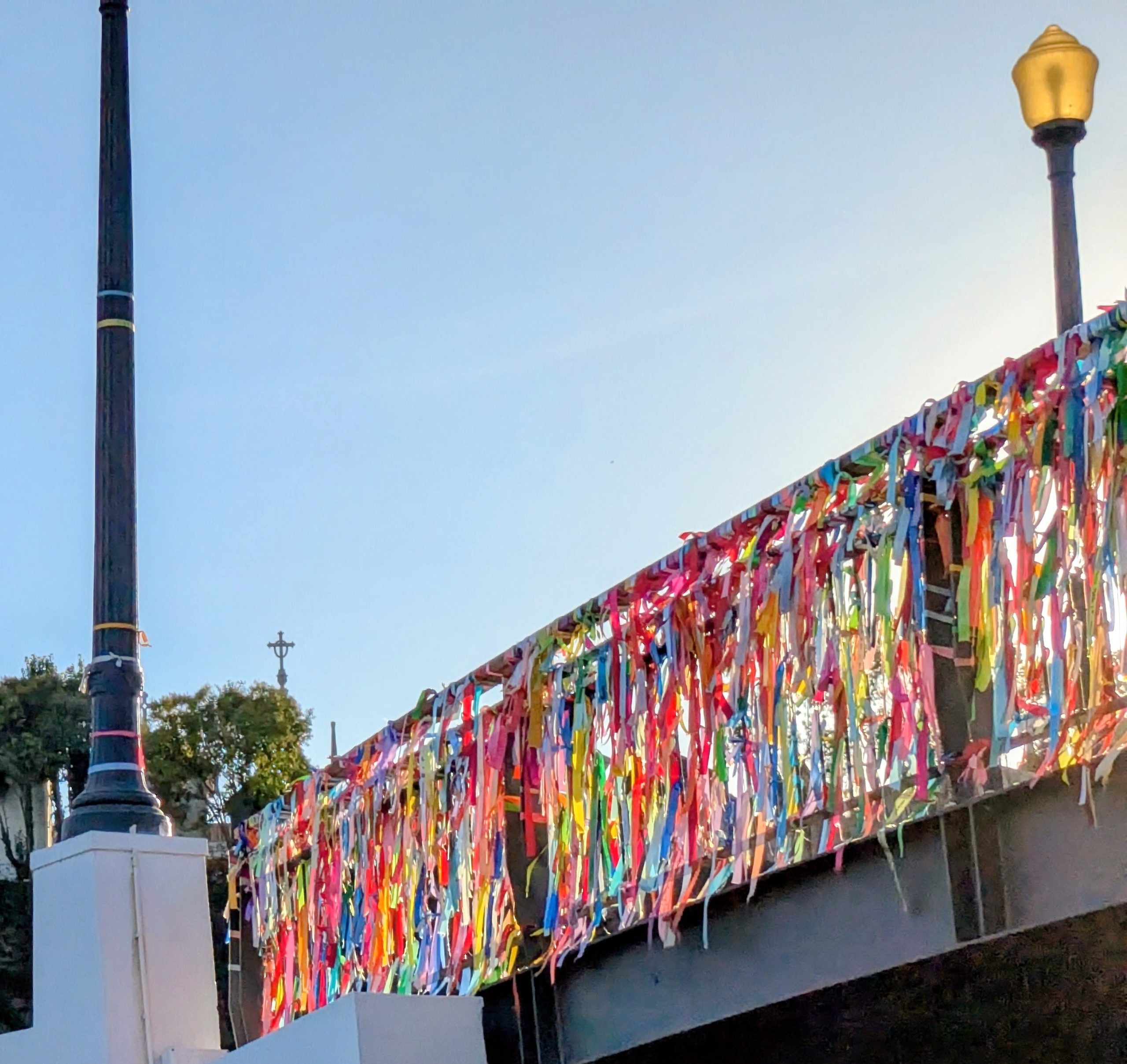
We leapt aboard one such boat for the last tour of the day and enjoyed our first glimpse of the town – and several of its elegant Art Nouveau buildings – from the water. Here, the strange habit of attaching ‘love locks’ to bridges has been replaced by a pretty tradition of tying ribbons to the railings, which flutter in the breeze and prevent damaging the structure with heavy padlocks. This local practice began more than twenty years ago, when university students began decorating the Ponte Laços de Amizade (the Bridge of Friendship) with ribbons bearing their names, to symbolize love and friendship. It has since grown into a community project and has even been extended to other bridges in the centre of town.
Again, we only had a couple of days to explore, but Aveiro is a good size to explore on foot, and with a base right beside the canal, we had easy access to the sights, sounds and tastes of this attractive town.
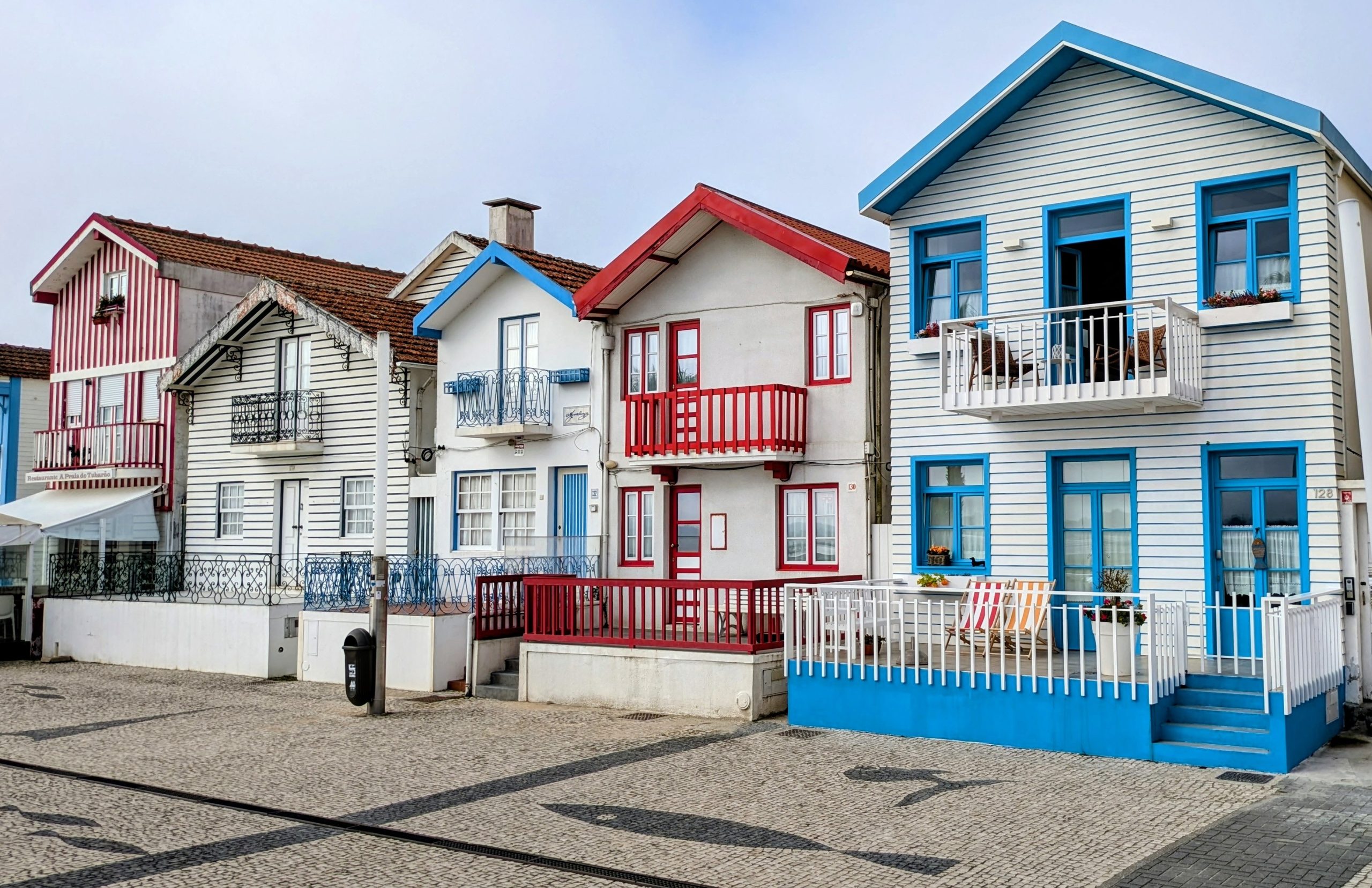
We also drove out to the coast, to a narrow coastal peninsula situated between the Ria de Aveiro lagoon and the Atlantic Ocean. Costa Nova or Gafanha da Encarnação was once a fishing village on the marshes, where local fisherman stored their fishing gear in wooden huts known as palheiros. Originally built in the 19th century, they have since been converted into holiday homes, the exterior wooden panels painted in bold, vertical stripes of red, blue, green, or yellow, which add considerable character to the streetscape. After a gentle stroll along the promenade, I was inclined to settle in this quaint little village, after discovering Vila Adelaide was for sale ~ surely a serendipitous sign for an Adelaide Girl?!
We also sought out a local eatery for lunch. The One & Only was keen for some fresh fish, and tracked down a popular little place further down the peninsula where we partook of a traditional Portuguese fish stew known as Caldeirada. Served in a large tin pot, the cod, cockles and prawns had been boiled with potatoes, peppers and tomatoes in a white wine broth garnished and with parsley and bay leaves. The result was incredibly aromatic and quite delicious. Our kind neighbours also encouraged us to share their eel dish. Another local specialty, these morsels of baby eel were cooked like white bait – simply dipped in flour and fried – and made a crispy and very tasty appetizer.
We will return to Portugal, undoubtedly, but I really must learn a little Portuguese than “obrigada” before we do!
*With many thanks, as usual, to the One & Only, whose photography is generally so much better than mine!