And I dream I’m an eagle
And I dream I can spread my wings
Flying high, high, I’m a bird in the sky
I’m an eagle that rides on the breeze.
High, high, what a feeling to fly
Over mountains and forests and seas
And to go anywhere that I please. ~ABBA
This weekend I finally realized a childhood dream and got to fly a plane. The flight was a birthday gift from the One & Only, and I have been anticipating a clear, warm day with increasing impatience. This Easter weekend, the sky was blue, and the temperature was at last resembling something Spring-like. I called the flight instructor on Friday and made a booking.
We have driven around, across and over the Isle of Wight several times already. The One & Only is on a mission to circumnavigate it by foot. He also hopes to sail around it one day. (Yes, I will go with him, but only if I can lounge around with a glass of bubbles and no one expects me to do stuff with ropes.) We could cycle around it or join the International Scooter Rally (the Vesper Festival?) on a motorbike, but I loathe pedalling up hills, and nor do I fancy the crowds at a motorbike rally. I would rather take to the clouds and fly around the Isle of Wight. Like an eagle.
Admittedly, the plane I am proposing to fly is a far cry from a Boeing 747 or even a Cessna, but a flighty, light-as-a-feather Microlight. Jon Thornburgh, a microlight pilot I discovered on the internet, describes a Microlight as “seat of the pants” flying, which I find slightly disturbing. And my flight instructor is no more reassuring, as he outlines the differences between Microlights and larger aircraft.
Many microlights have very little instrumentation, most do not even have a compass. So, it’s risky to fly through cloud, or at night time. In other words, just don’t. A Microlight is also quite a bit slower than a regular plane. However, due to its relative simplicity, the licensing regulations for both pilots and aircraft are less stringent than for conventional light aircraft. I guess that’s a good thing. It certainly allows for a slightly cheaper hobby.
As its name suggests, the Microlight is incredibly light – it’s made of fiberglass – which means you can manoeuvre it around an airfield with a gentle push. It also means there’s a weight issue: there’ll be no squeezing an elephant into the back of this Mini. And it makes the Microlight more susceptible to the elements, so be prepared for a bit of bouncing about on the breeze.
As I was soon to discover, my perfect spring day was not necessarily the best time for a smooth ride. Contrary to popular belief – well, mine, anyway – winter is the best time to fly, as long as you have a decent coat. Firstly, there are no thermals to contend with – these are what creates the trampoline effect – so your flight will be much calmer and smoother. There will also be greater visibility. Whereas Brighton and Bournemouth are both a murky blur on the horizon on this hazy April afternoon, crisp, clear winter skies allow for 100-mile visibility. In winter, you are also less likely to run into a thunderstorm – unless you forgot to heed that looming mass of black cloud – and there will be fewer small aircraft to contend with.
A slightly less reassuring piece of information: the Microlight comes apart like Lego (my word not his) and can likewise be put back together with very little effort, so it can be maintained by unlicensed mechanics. If you are good at Lego. Hmmm.
Before I left home, I was pleased to read on a website that Microlighting has advanced so much over the last twenty years that it has become the safest and most affordable form of motorised flight in the UK. And much to my relief, I would not be flying in one of those one-seater, open-to-the-elements, glorified-paraglider-type microlights or gyrocopters, but a real plane with wings, two seats and a door you can shut. Albeit a small one. The Smart Car of aviation.
When ABBA released ‘ABBA: The Album’ in 1977, I fell in love with the first song, Eagle. The music swooped and soared like an airborne raptor, and likewise my imagination took flight. If I couldn’t have my own wings, I would fly a plane, I decided at the tender age of ten. Well, over the intervening years I have flown in many larger, commercial aircraft, and some not-so-large ones, but this will be the first time anyone has offered to let me take the controls. I am already ten feet in the air with anticipation.
Back down on the tarmac, I climb into the driver’s seat. Pilot’s seat. Aiden and I have a brief chat about the controls, then I pose for a photo or two. While I am awfully excited to try flying the aircraft myself, I am also a little relieved to learn that Aiden can take back control of the plane the moment the going gets tough – or I just want to take some photos. Then, as if dancing a Scottish Reel, Aiden and Number 2 Son twirl the little plane around, manually, towards the runway. At last we are off.
In seconds, we are bumping across the grass and onto the AstroTurf landing strip (it can get very wet and boggy at Sandown). A few seconds more, and we are airborne, high above the golf course next door, and heading east towards Bembridge.
Exhilarating, breath-taking, intoxicating, enthralling. I have scoured Roget’s Thesaurus for the perfect word. Put them all together and you may come close to the sense of freedom and joy of soaring through the sky in a plane barely bigger than a ladybird. We fly up to 3,000 feet, and across the Solent towards Chichester, following the coastline past Portsmouth and Hayling Island, where a rash of umbrellas and beach towels has sprung up along the sand during this exceptionally warm Easter weekend. We loop around and back towards the Isle of Wight. We soar past Southampton Water, ducking below the commercial air traffic route and dodging a mighty Spitfire by the skin of our teeth, who is too busy showing off its highfalutin’ tricks to pay attention to a sparrow-sized Microlight.
I have the controls at this point, which is probably why Aiden seems a bit edgy and less-than-impressed with the slapdash attitude of our unobservant aeronautical gymnast. I am thrilled, however, far too much of an amateur enthusiast to appreciate our near-death experience – and far too busy trying to fly a three-dimensional Smart Car in a straight-ish line through choppy thermals to worry about a clever-clogs Spitfire.
A microlight is a far more sensitive beast than I had imagined, and the joystick responds instantly to the slightest touch. As the actress said to the bishop. Which is fine, once I understand that it does not work like a stick shift on a manual truck.
We fly over the estuary at Newtown, and a flotilla of sailing boats, where last week there were half a dozen… turning left at Yarmouth, we fly through the narrow gap between Hurst Point Lighthouse on the mainland and the Cliff Point Battery on the north-western tip of the island… and then we are flying south-west towards the best possible view of the Needles. Then it’s “second to the right, and straight on till morning”, or more sensibly, another sharp left-turn and straight on towards Blackgang and Saint Catherine’s Lighthouse, following the cliffs below Military Road. The Isle of Wight spreads out below us, an irregular green and yellow patchwork, trimmed by a turquoise sea. The last leg back to Sandown takes us over Ventnor and Shanklin, before we swoop back over the golf course and the Alverstone Garden Village and glide gently down… landing with a rough sashay on the knurly airfield.
There is an unexpected sense of anti-climax at suddenly finding myself grounded again. Hedgerows and buildings rush up to meet me in sharp contrast to the enormous expanse of sky only minutes before, as we skittered above the sea. We drive up to Culver Down, so I can reluctantly re-acclimatize. I may never get to loop-the-loop in a Spitfire, but I can’t wait to fly a Microlight again.
 There is something mystical, magical and utterly captivating about an island. Particularly a small one like the Isle of Wight. Acquiescent in its geographical limits, yet baffling in its sense of ‘otherness,’ its sense of isolation from a more consequential mainland.
 the hills below the Downs. It is early spring, and the formal gardens are looking sparse, but will come into their own later in the year. These gardens have been redesigned using plants common to the Mediterranean and drier areas of the southern hemisphere, to ensure less water is needed to maintain them. This not only came about because a previous lady of the manor was Sicilian, but because the Isle of Wight is not self-sufficient during summer, and must bring water from the mainland, through pipes beneath the Solent.
 Further up the valley, we discover woodlands on the cusp of bursting into a full-throated chorus of bluebells. We plan to come back in a week or two to see them at full throttle. Leaving the woods through a kissing gate, we follow a steep, sunken path uphill. As the path emerges onto Castle Hill, we are confronted by a pair of ancient stones: a megalithic standing stone or menhir made from local sandstone four metres high, with a smaller one lying at its foot. It is said thy were dislodged by the Saxons and, later moved by a nineteenth century squire, so that today they no longer stand where they are thought to have been originally planted: at the entrance to a nearby Neolithic burial ground, or possibly as part of a druid temple. The National Trust website suggests that ‘moot’ is Saxon for meeting, and it seems probable that the menhir provided a meeting point for the Saxons, and that Mottistone is a corruption of Moot Stone.
 Yarmouth, is the old railway station. Once part of the island rail network, the station first opened in July 1889. Unfortunately, like many other lines on the Isle of Wight, the Freshwater-Yarmouth-Newport railway, was never a financial success, and it finally closed down in 1953. For fifty years the station building housed the Yarmouth Youth Club. It was sold in 2010, when the original building was carefully renovated and decorated with a railway theme. It opened as a restaurant in 2014. The aptly named ‘Off the Rails’ now provides sustenance to walkers, cyclists, holidaymakers and locals who pass along the disused railway track that is now a path along the Yar to Freshwater.
 menus for breakfast, lunch and dinner with many nods to this railway themed diner: a Controller’s Chowder loaded with seafood; the Yardmaster’s fabulous carbonara with pork belly and freshly made pasta served up in a wooden bowl; Firebox fishcakes, moist and fresh and rolled in charcoaled coconut crumbs to resemble coal; a Trackside fish’n’chip butty, and Furnace, a smoked mackerel bruschetta, to name but a few. Anything take your fancy? Till now, I have only popped in for lunch, but if the rest is as good as the meals we have sampled, no one will suffer from a lack of tasty offerings. I also like the fact that the kitchen does not cater to the usual notion of a kids menu full of fried food and carbs but simply provides smaller samples of the adult menu.
 Three birthdays, two wedding anniversaries and a long weekend of celebrating in Spain led to chronic indigestion and border-line alcohol poisoning, but we had a ball. We also got to spend a day in Jerez learning all about sherry.
 set to work to flex their new-found muscle and spread their territories across the Atlantic, claiming large slices of South America. Cadiz became a primary port for exploration and colonisation, and the ships setting sail for the New World were often better stocked with wine than guns.
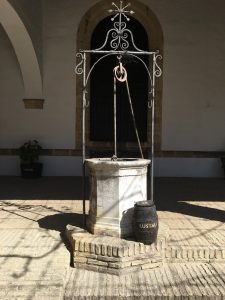
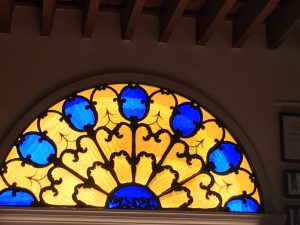 Our first stop was to Bodegas Lustau, which was established in the late 19th century by José Berdejo. In the 1940s, he was joined by his son-in-law Emilio Lustau, who expanded the business considerably. Lustau is now one of the world’s most reliable sherry brands, easily recognisable by its black, smooth-shouldered bottles. It also claims to produce the largest range of sherries. I had certainly never realized there were so many different types.
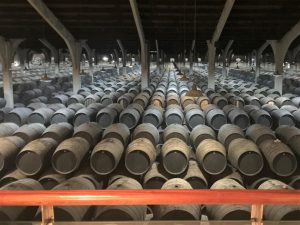 harvest, as it is used for most sherry styles, including amontillado and oloroso. Two other grape varieties – Pedro Ximenez and Moscatel – are used for sweeter sherries that are often preferred in northern Europe over the drier styles.
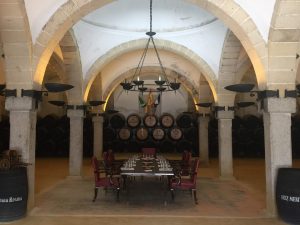 The barrels, originally made from chestnut, are now made from white American oak, the older the better, to ensure minimum oak influence. For the sweeter sherries, the need to keep the barrels cool is not so significant. Natural sugars are increased with one of two methods: either late harvesting or drying the grapes in the sun after picking. Each style of sherry therefore develops different characteristics.
 Rome again. While I have been lucky enough to visit the Eternal City several times, I always seem to land here in the heat of summer. And any city in the height of summer is hell. But this time it is winter, and walking the cobbled streets is a joy when compared to the sweltering, pulsating tourist-laden traffic of July and August.
 were also paying for the table. And the view.
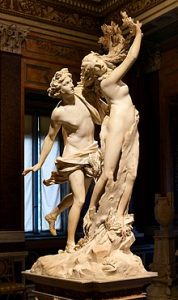
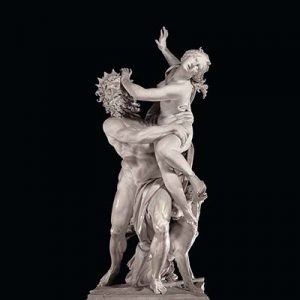 And we finally get to visit Villa Borghese. Originally a country villa in a vineyard on the edge of Rome, Villa Borghese was created in the 17th century by Cardinal Scipione Borghese, the favourite nephew of Pope Paul V, to house his art collection and his homoerotic orgies, so the legend goes. He also created several acres of park and gardens around the villa. As a patron of the sculptor Bernini, he commissioned several statues from his protégé that have become the real celebrities of his art collection, along with a number of Carvaggio paintings. A greedy and unscrupulous man, the Cardinal was known to go to any lengths to acquire the works of the most renowned artists of the day for his collection: it is a wonderfully flamboyant tale of grasping skulduggery that Shakespeare would have leapt at to furnish the plot for one of his plays. He was not above stealing the works he couldn’t buy and trumping up charges against any dealers who did not accept his offers, and apparently even had Raphael’s Deposition removed from an altar in Perugia.
 Caravaggio’s Madonna and Child with Mary’s mother, St Anne. Caravaggio’s penchant for realism went too far for the Church authorities in this case. Depicting a barefoot Madonna with cleavage on abundant display (symbolic of her motherhood), a naked Jesus as toddler (deemed highly inappropriate at the time) and St Anne as an older woman, wrinkled and worn, the painting had been commissioned for St Peter’s Basilica, but was rejected, and ended up in Borghese’s private collection.
 It is mid-February, and our last day in Rome. The One & Only has caught a cold and is happy to stay in bed, cuddled up with his pillow and the rugby. I leave him to it and take an early train from Roma Termini to Frascati, a hilltop town twelve miles south-east of the city, on the rim of a dormant volcano. The train sweeps through the outer burbs of Roma, following the scattered remains of an Ancient Roman aqueduct that once emptied a lake behind Frascati into the water tanks of the city.
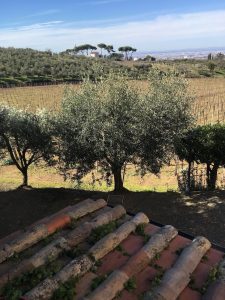 nobility from the 16th century onwards. It was here, above the sweltering city, that many illustrious citizens built a plethora of extravagant country villas around the rim of the ancient but dormant volcano. Their reward? Stunning views, cool breezes, plenty of quaffable wine.
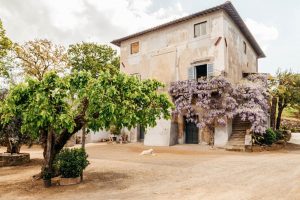
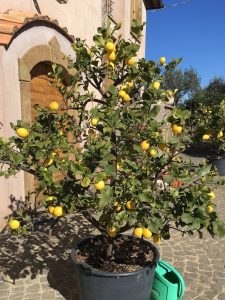 We arrive at the vineyard around midday, to find an old stone building roofed in terracotta tiles, and a courtyard dotted with lemon trees in large tubs. A future project to make limoncello or gin perhaps? This vineyard has been run by the same family for seven generations, and one of the current owners comes out to meet us, accompanied by Dominique. He is keen to share his knowledge and speaks in soft but rapid Italian, fondling the bare vines as he talks, barely giving Dominique time to translate. Nino and his brother run the vineyard together, and despite their seventy plus years, they do almost everything by hand.
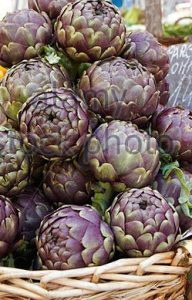
 accompanied by the clinking of our treasure trove of wine and olive oil bottles. After fond farewells, we head back to town for lunch, where we feast like kings at a local cantina, on the best pepperonata I have ever tasted, mixed with diced roast potatoes. Two more platters follow: a white bean and tomato dish, and carciofe and green beans. Greedily, like Oliver Twist, we all go back for seconds, before we realize there is more to come: two different pasta sauces, one red, with beef, one white, with broccoli. And while we devour these simple but luscious dishes, Max pours the wine, first from bottles from the winery, later in carafes – doubtless from a plastic container! Anyone for dessert?
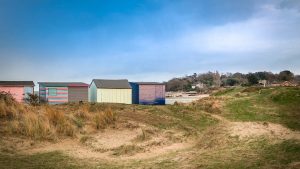 St Helen’s is an attractive English village that boasts rich tales of royalty and smugglers. It is centred on a long, broad green that sits high above St Helen’s Duver, on the eastern end of the Isle of Wight.
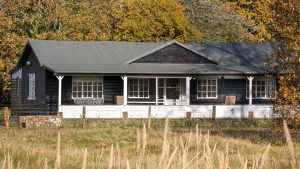 Queen Victoria at her nearby island retreat, Osbourne House. Unfortunately, club membership diminished dramatically after World War 2 and the Club finally closed in the 1960s. It was decided by the remaining members to present the land to the National Trust. The original weatherboard clubhouse has been converted into an attractive and comfortable National Trust holiday cottage, where we stayed for a gloriously windy week in January. Now the golf course is common land, and popular with many local dog walkers… and ducks!
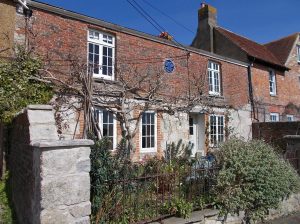 rags-to-riches, Pygmalion-style story, Sophie was sent to the workhouse at Newport when her father died, but she would eventually find her way to the French court. After leaving the workhouse, she gained a position as a chambermaid in Portsmouth. Moving on to London, she was employed as a servant in a high-class brothel in Piccadilly. There, she met the exiled French Duke de Bourbon. Pretty and quick-witted, she soon became his mistress and protégée. Later, she followed him to Paris, where she became a minor celebrity in the court of Louis XVIII. The Duc arranged a dowry and a marriage of convenience to his military aide, but kept her as a lover, bequeathing her a title and, on his death in 1830, a large fortune. However, the circumstances of his death (he was discovered with a rope around his neck) and her subsequent inheritance, cast suspicions on the Baronne de Feuchères, and she was forced to flee back to England, where she died a decade later, still entangled in legal squabbles about her inheritance.
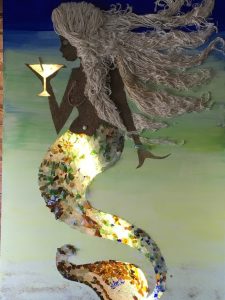 A couple of miles north of St. Helen’s, a once-popular pub at Pondwell has recently metamorphosed into The Mermaid, a bright and airy home for the Isle of Wight Distillery and its new cocktail bar. We popped in to try its latest concoctions and to look at the beautiful gin stills with their flute-like pipes, set up in what used to be the pub kitchen. The weather was a little chilly, but the large deck at the rear, overlooking vineyards and a glimpse of the sea, will provide a wonderful summer destination. Pete Muspratt welcomed us enthusiastically, and offered to take us through the story of the Isle of Wight Distillery, followed by a tasting of their products.
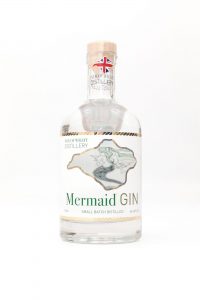 days to ‘allow the flavours and aromas to mellow and marry together.’ The result is described as a ‘smooth, refreshing, and complex gin with a contemporary style’ with a nose of ‘fresh citrus, sweet spice, gentle juniper.’ Pete suggests that it is best drunk with Fever Tree’s elderflower tonic water.
 The invisible, invincible, bullying wind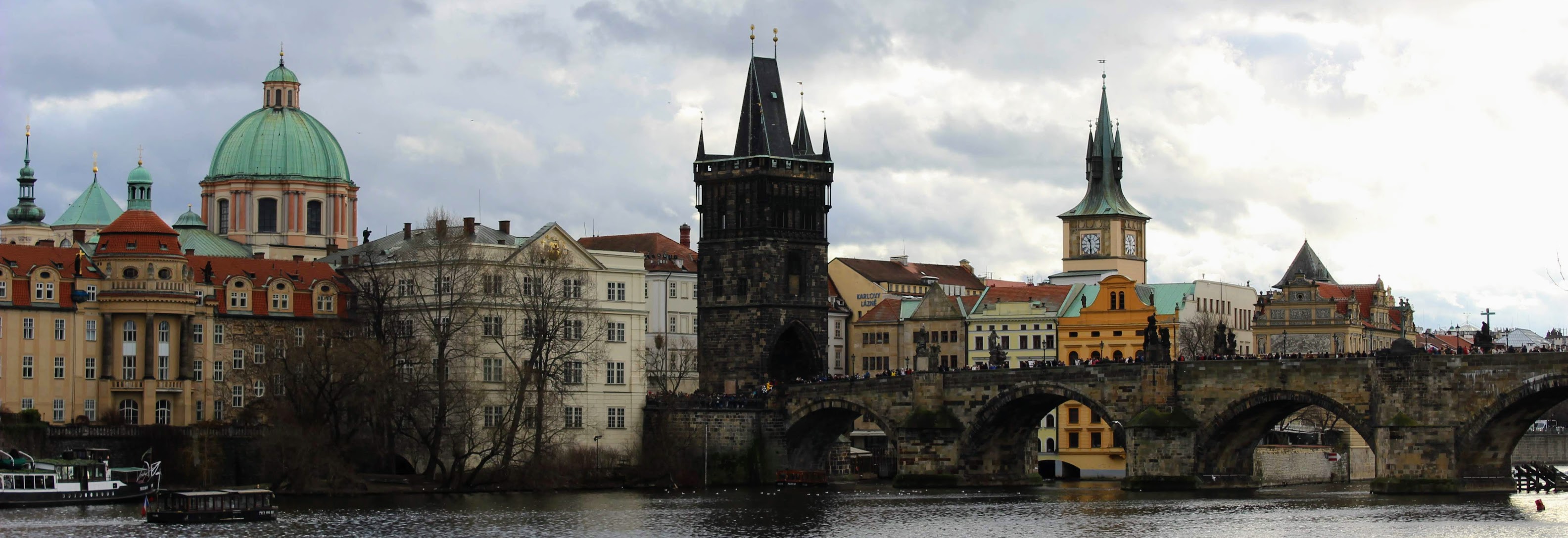
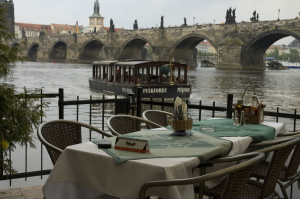 We are delighted to rediscover a tiny restaurant in Malá Strana. ‘Čertovka’ is reached by a staircase so narrow there is a traffic light to prevent jams. Apparently, it was an old fire lane, the only one remaining in the Lesser Town. The service here has become infamous for its shoddiness, but the view to the Charles Bridge and along a narrow canal that runs beside it, is rather special. The name of the restaurant actually comes from the name of this canal or stream, an arm of the Vltava that used to feed the many mills and tanning works along its banks. I remember the lush horse chestnuts in summer that would shade the terrace as we sipped wine and looked out over the water. My sister-in-law once made a lovely charcoal sketch of the scene. The food is good, if a tad more expensive than some, but I am happy to pay for the view and a dose of nostalgia. Number One Son is delighted to taste a Czech dish he adored as a child: slabs of bread dumplings drowning in rich meat gravy. International cuisine has made some headway over the intervening years, but Czech and Italian restaurants still dominate the culinary scene, as pork and pizza become our staple diet. And the One & Only was thrilled to find that the Christmas carp is still sold fresh from tubs on the side of the street.
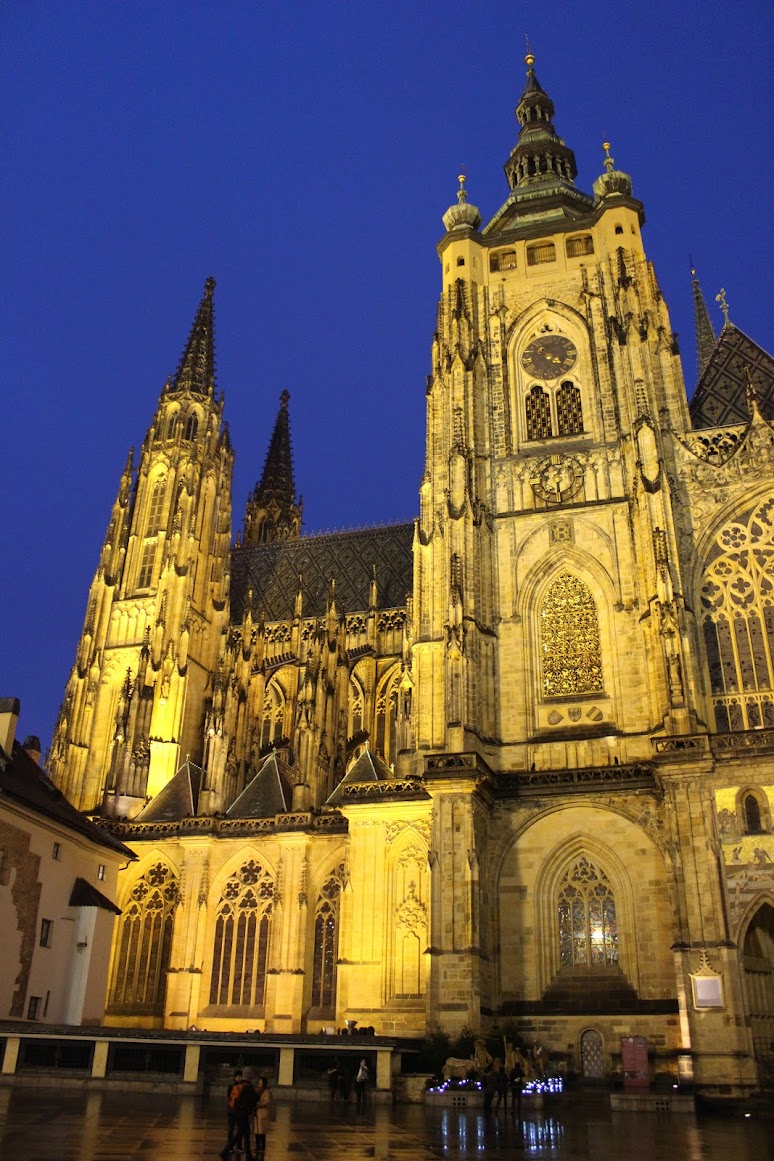 bench seats. Here we indulge in a lunchtime meat fest of extraordinary proportions: dinosaur-sized spare ribs and stonking great pigs knuckles, to the delight of the One & Only, all accompanied by buckets of Czech beer. Pilsner Urquell or Staropramen, I can’t remember which, yet, notoriously disinterested in beer, I rather like these lighter Czech varieties. After gorging ourselves to bursting point, we set off uphill to walk off the calories in the fading light and find Pražský hrad (Prague Castle) at the top of the hill, with the stunningly beautiful Saint Vitus cathedral tucked behind its walls. Somewhat obscured by the castle buildings at ground level, Saint Vitus can, nonetheless, be seen clearly on its hilltop from almost anywhere else in the city. A life-sized straw nativity has been arranged to one side of the cathedral’s vast entrance (I loved Mary with her straw pigtails), and the gargoyles and glorious wrought iron gates keep us glued to the spot in awe for some time.
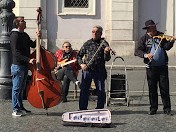
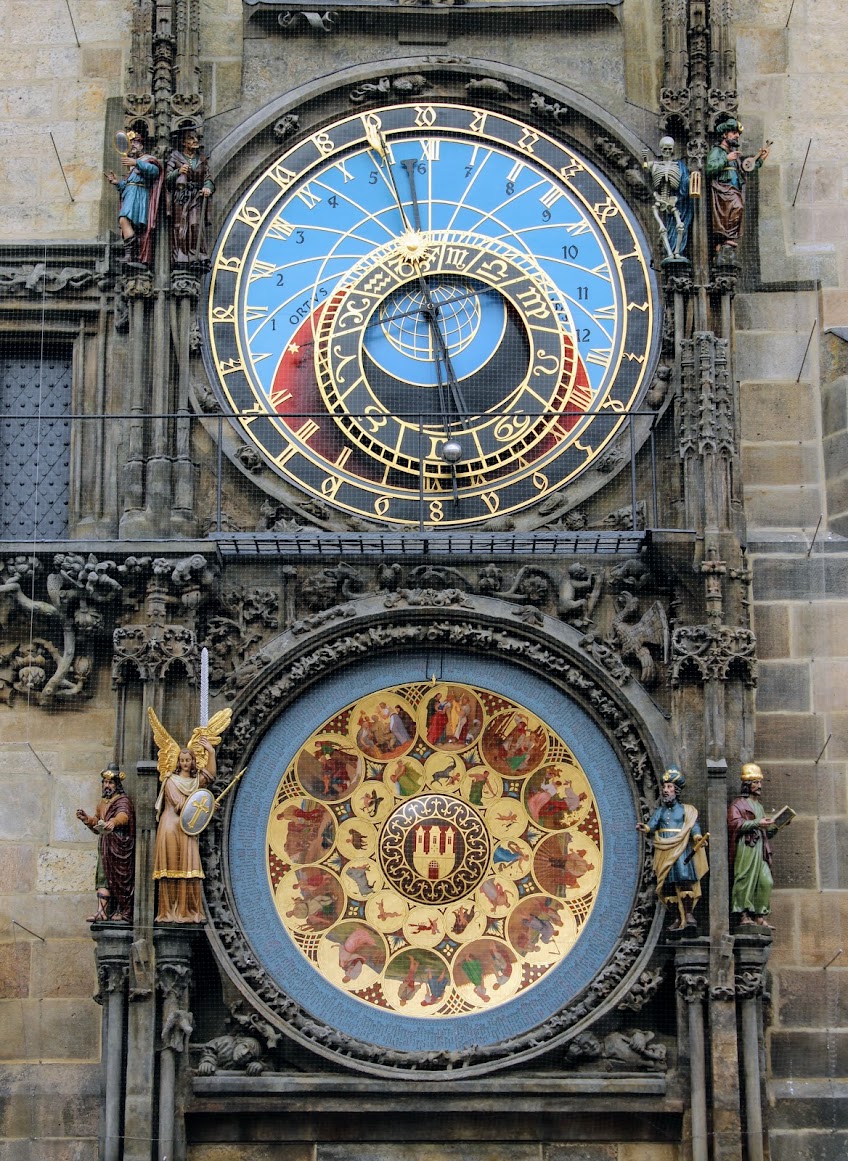 for granted. I still remember catching the metro into the old town with a small son on my back, to stand under the mediaeval astronomical clock and pinch myself to think that I really lived here. This unusual clock is another popular tourist spot, and the area beneath it is often made impassable by mobs of camera-flashing admirers. First constructed in 1410, the two-faced clock is a dizzying array of dials and hands and astrological symbols on a starry night sky. Twelve apostles appear from a small door above the double face every hour and disappear through a second one, each holding the symbol that represents him. At the sides stand four more figures: an old miser with a bag of gold depicting the cardinal sin of Greed, a well-dressed figure with a hand mirror representing Vanity; the skeletal figure of Death tolls a bell and holds an hourglass to remind you that the end is inevitable, and beside him is a figure known commonly as the Turk, as the symbol of lust and earthly pleasures. Back in the 1990s there were fewer tourists in town, so it was easier to stand and gawp for as long as a small boy could sit still. Then we would move on a few steps to find ourselves hypnotized by the jazz band that frequents the Old Town Square to this day: a double bass, a clarinet, a saxophone and trumpet, a banjo and a washboard. Tonight they perform beside a giant polar bear, their old voices grown crackly and faded after so many years, almost drowned out by the carol singing students on the stage beneath the enormous Christmas tree. So much is the same, yet we instantly miss the pen of farm animals – Thelwell ponies, sheep and donkeys – that used to entertain the children near the Irish pub, ‘Caffreys.’
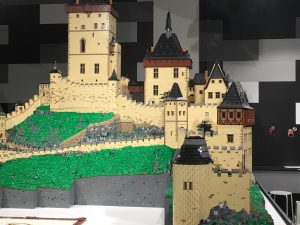 Lego Museum. A fabulous Lego exhibition in the basement of Hamley’s holds us captive for ages, gazing upon the castles and cathedrals of Bohemia in intricate and spectacular detail. Meeting friends eventually takes priority over a plan to attend a Christmas concert in one of the many church venues, but the lapse simply provides an excuse to return. Number Two Son doesn’t remember living here – he was not quite three when we left – but he has proved invaluable with his instinctive sense of direction, and we are rarely lost, even when memory fails us. It has been a wonderful walk down memory lane, one I would love to repeat in the spring, as the trees start to bud, the days grow longer and the chill has gone from the air.